
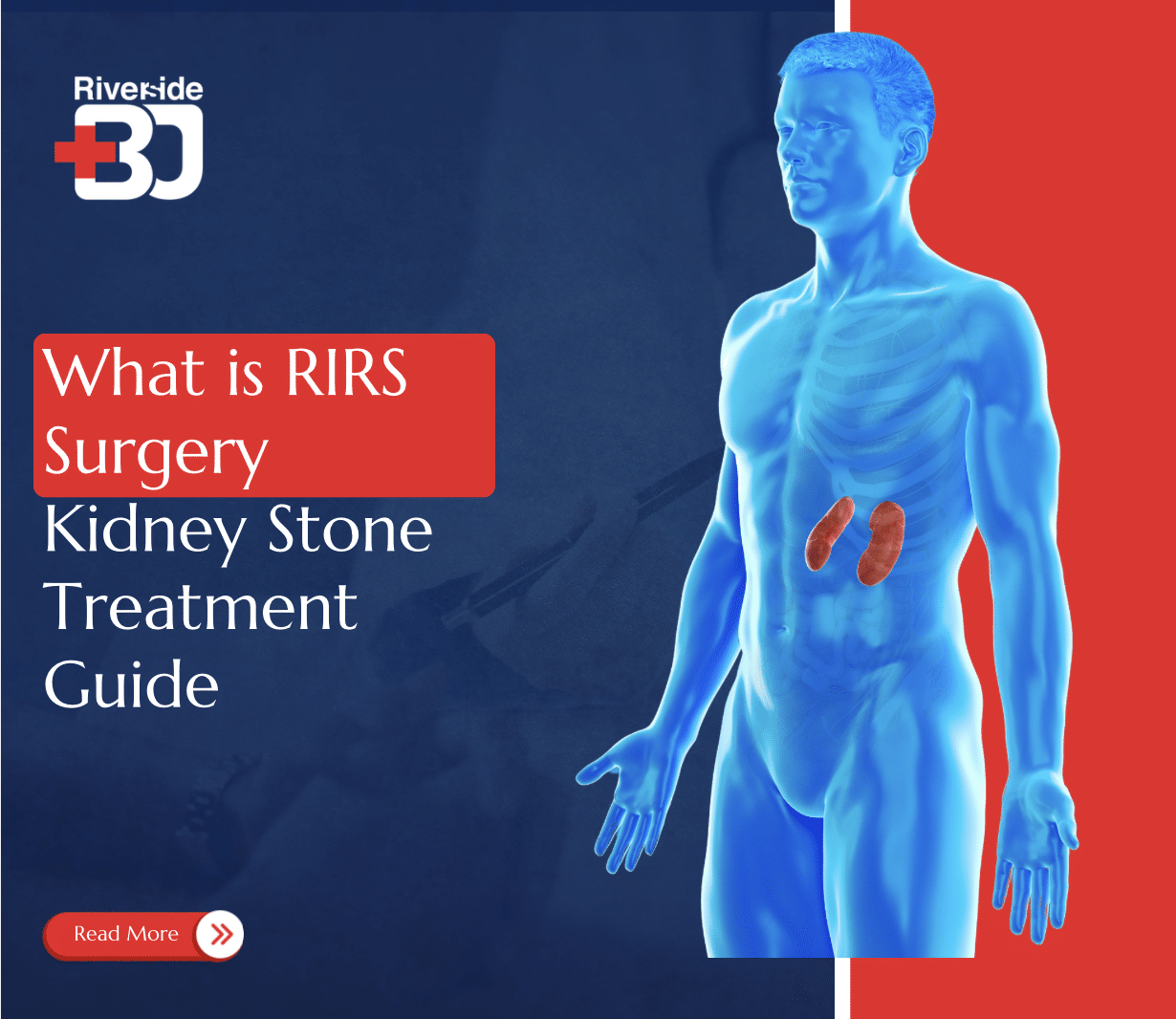
Minimally invasive procedures are transforming urology, offering patients faster recovery, reduced complications, and precise outcomes.
Among these innovations, RIRS or Retrograde Intrarenal Surgery stands out as a leading technique for treating kidney stones without the need for large incisions. By operating on the urinary tract with advanced flexible instruments, RIRS allows surgeons to access and remove stones with accuracy.
Let’s understand what RIRS surgery is, break down the procedure, explore its key benefits and potential risks, and outline what patients can expect during recovery.
Understanding RIRS Treatment For Kidney Stones
Kidney stones can present challenges that medicines or simpler procedures cannot address. RIRS provides a minimally-invasive solution, allowing urologists to reach the kidney through natural urinary pathways and remove stones directly without external incisions.
Full Form of RIRS
RIRS stands for Retrograde Intrarenal Surgery. The term “retrograde” means moving backward through the urinary tract, while “intrarenal” refers to inside the kidney.
In simple terms, it’s a technique where urologists reach the kidney through natural urinary passages to treat stones directly, without external cuts.
When is RIRS Recommended?
RIRS is often suggested by urologists to patients when stones are:
- Medium to large and unlikely to pass naturally
- Lodged in complex areas of the kidney or urinary tract
- Recurrent, returning despite previous treatments
- Requiring a procedure suitable for those unfit for open surgery
By offering a precise, targeted intervention, the RIRS minimizes strain on the body while maximizing the effectiveness of treatment.
Advantages over Traditional Surgery
Traditional stone surgeries often involve visible cuts, greater discomfort, longer hospital stays, and delayed recovery.
In contrast, RIRS surgery avoids external incisions and uses natural urinary passages to reach the stone, making the process much gentler.
Because of this precision, doctors gain better control, and patients benefit from a safer, more effective, and less stressful treatment option.
RIRS Procedure Steps Explained
The success of retrograde intrarenal surgery lies in its structured approach. Each stage is carefully planned to ensure safety, precision, and effective stone removal.
Here’s how the RIRS procedure steps unfold:
Pre-Surgery Preparation
Before the surgery begins, patients undergo basic tests such as urine and blood work, along with imaging scans to locate the stone. In some cases, preventive antibiotics are given as well.
After that, fasting for a few hours before surgery is usually advised, and anesthesia is administered to keep the patient comfortable throughout the procedure.
Use Of Flexible Ureteroscope
Once the patient is ready, the surgeon inserts a thin, flexible ureteroscope through the urinary tract. Equipped with a light and a camera, this device provides a clear view inside the kidney.
Moreover, its flexibility allows access even to narrow or complex areas without the need for external cuts.
Laser Fragmentation Of Stones
After reaching the kidney, a fine laser fibre is passed through the ureteroscope. The Laser emits controlled energy to break the kidney stone into tiny fragments.
This method ensures that even hard or large stones are reduced into pieces small enough to be removed or passed naturally with urine.
Stone Removal Process
Finally, the broken pieces are either extracted using tiny baskets or allowed to pass naturally through urine.
The surgeon makes sure no fragments remain, reducing the chances of future discomfort or complications.
Benefits Of RIRS Surgery
Being a modern approach, RIRS surgery is recognized for the positive outcomes it delivers.
Below are the key benefits that make this procedure a widely chosen option for kidney stone management:
Minimally Intrusive Technique
RIRS works through natural urinary passages, which means no visible scars and less strain on the body.
For patients, this translates to reduced discomfort during recovery and a lower chance of complications.
In addition, it allows surgeons to precisely target stones without affecting surrounding tissues, making the treatment both safe and gentle.
Shorter Hospital Stay
Another major benefit of an RIRS surgery is that most patients require only a day or two in the hospital for observation and initial recovery. This shorter stay reduces both medical costs and disruption of their daily life.
Besides, it also lowers the risk of hospitalisation-related infections, giving patients confidence that they can return home quickly and continue recovery in a familiar environment.
High Success Rate
RIRS is known for its reliability in clearing kidney stones effectively. The use of advanced scopes and Laser technology ensures that stones of varying sizes can be treated with precision.
As a result, the high success rate reduces the need for repeat procedures and ensures better long-term outcomes.
Suitable for Complex Kidney Stones
Some kidney stones form in challenging locations or are too large for simpler treatments.
RIRS makes it possible to reach these areas without open surgery.
Its flexibility allows doctors to handle complicated cases safely, offering hope to patients who may not have had effective options before.
RIRS Surgery Side Effects
Like any medical procedure, RIRS may have some after-effects.
These are usually temporary and manageable, but should still be understood by patients before surgery.
Mild Pain Or Discomfort
Some patients may experience slight pain or burning sensations while passing urine post-surgery. However, this usually settles within a few days with basic medications.
Temporary Bleeding
It’s common to experience blood in the urine for a short time. This is a normal response and generally resolves without treatment.
Urinary Infection Risk
In rare cases, mild infections can occur. Doctors may prescribe antibiotics to prevent or manage this quickly and effectively.
Rare Complications
Rarely, complications such as injury to the urinary tract may happen. These are uncommon and minimized when the procedure is done by an experienced urologist.
RIRS Surgery Recovery Time
Recovery after the RIRS surgery is usually smooth, and knowing what to expect makes the process even easier.
Here’s a look at the typical recovery timeline, care instructions, and when it’s safe to resume normal activities:
Average Hospital Stay
Most patients stay in the hospital for only one to two days after this procedure. This short stay allows doctors to monitor the recovery and ensure the urinary tract is functioning well.
Patients are usually discharged once they are stable and comfortable, with clear instructions for home care.
Post-Operative Care Guidelines
After RIRS, following simple care measures help in faster recovery and prevent complications. Patients are generally advised to:
- Stay hydrated: Drinking plenty of water helps flush out tiny stone fragments and keeps the urinary tract clear.
- Avoid heavy lifting or strenuous exercise: Give the body time to heal before resuming physically-demanding tasks.
- Take prescribed medicines regularly: Pain relievers and antibiotics (if given) should be taken as directed for smooth recovery.
- Watch for unusual symptoms: Persistent fever, severe pain, or heavy bleeding should be reported to the doctor immediately.
- Attend follow-up appointments: Regular check-ups ensure that the kidney is healing well and no fragments remain.
When Can Patients Return To Their Normal Activities?
Most patients can return to light daily routines within a week after surgery. Gentle walking is usually possible in a couple of days, and office work can often be resumed within a week.
However, physically-demanding activities such as heavy exercises or sports should be delayed for three to four weeks, based on the urologist’s advice.
Risks Of RIRS Surgery
Although RIRS surgery is considered safe, every medical procedure carries some level of risk.
Being aware of these possibilities helps patients stay informed and be prepared before treatment.
Possible Complications During Or After the Procedure
In some cases, complications may occur. Some patients may experience narrowing of the urinary tract, injury to delicate tissues, or incomplete removal of the stones.
These situations are uncommon and usually managed effectively if detected early.
Risk Factors Based On The Patient’s Health Condition
The risks of RIRS surgery may be higher in patients with underlying health conditions such as diabetes, high blood pressure, or chronic kidney disease.
Age, weakened immunity, and a history of urinary surgeries can also influence safety and outcomes.
How To Minimise Risks With Proper Care
Consulting an experienced urologist is one of the most effective ways to reduce the risks.
In addition, following pre-surgery instructions, staying well-hydrated, and attending follow-up visits all play a key role.
With proper preparation and post-care, most patients can undergo RIRS with confidence and minimal concern.
Final Thoughts
Kidney stone treatment has advanced greatly, and RIRS surgery stands out as one of the safest and most effective options available today.
Combining advanced technology with a minimally-invasive approach allows stones to be removed with precision. Its proven success, even in complex cases, has made it a trusted treatment worldwide.
Anyone experiencing persistent kidney stone symptoms such as severe pain, blood in urine, or repeated stone formation should consult a urologist without delay.
At Riverside B&J Hospital, our experienced urologists specialise in retrograde intrarenal surgery, ensuring safe outcomes and smoother recovery.
With advanced facilities and a patient-first approach, we provide effective care for kidney stone management.
To book a consultation or know more about us, contact us now.