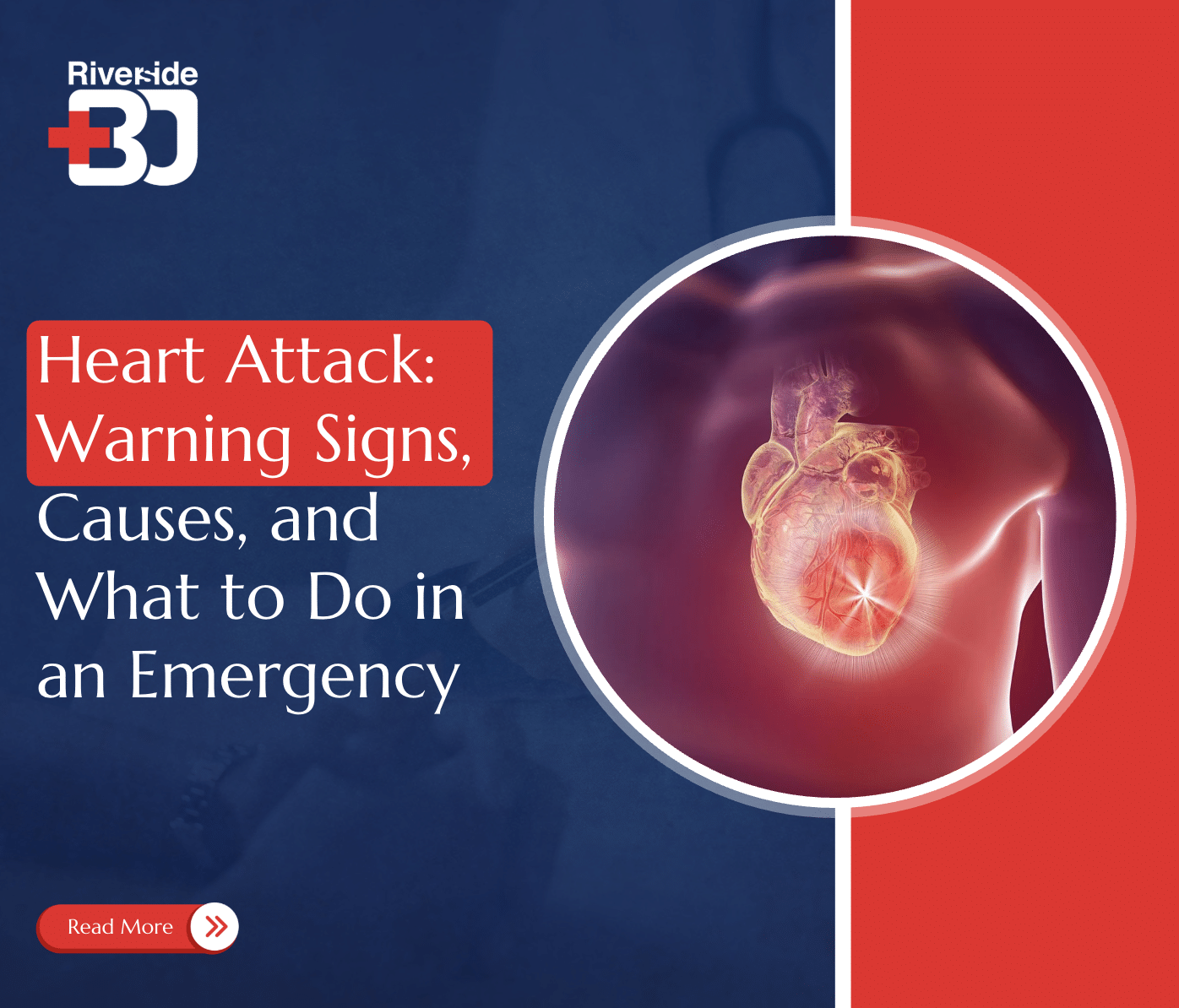
A heart attack occurs when the blood supply to the heart is blocked by a clot, cutting off oxygen to the heart muscles. This blog covers the warning signs of a heart attack, what to do in the critical first 10 minutes, and how primary angioplasty (PAMI) is used to treat it at the hospital.
India accounts for nearly 60% of the world’s heart disease burden, yet awareness of heart attack warning signs remains dangerously low. Every year, thousands of lives are lost not because treatment was unavailable, but because the patient or family waited too long to act.
The first 10 minutes of a heart attack are critical. The faster the blood flow is restored to the heart, the more muscle is saved. Let’s explain how to recognise a heart attack, what to do immediately, and what to expect at the hospital.
What Is a Heart Attack?
A heart attack, medically known as a myocardial infarction, occurs when the blood supply to a part of the heart muscle is suddenly blocked, usually by a blood clot forming over a rupture in a plaque-lined artery. Without oxygen-rich blood, the heart muscle begins to die within minutes.
Many people confuse a heart attack with cardiac arrest. They are not the same. A heart attack is a circulatory problem, where a blocked artery cuts off blood supply to the heart. Cardiac arrest is an electrical problem, where the heart suddenly stops beating altogether. A heart attack can trigger cardiac arrest, but the two conditions require different emergency responses.
Doctors classify heart attacks into two main types. A STEMI (ST-Elevation Myocardial Infarction) is a major, complete blockage requiring immediate intervention. An NSTEMI (Non-ST-Elevation Myocardial Infarction) involves a partial blockage and is typically less immediately severe but still a medical emergency.
Warning Signs of a Heart Attack
Recognising heart attack symptoms early can be the difference between survival and permanent damage. Symptoms can last anywhere from a few minutes to several hours and should never be dismissed as indigestion or muscle pain.
Classic Symptoms
• Chest pain or pressure, often described as a tight squeezing or heaviness in the centre of the chest
• Pain radiating to the left arm, shoulder, neck, or jaw
• Sudden sweating, even without exertion
• Breathlessness, with or without chest discomfort
• Nausea or feeling of impending doom
Atypical Symptoms in Women, Diabetics, and the Elderly
Not every heart attack presents with classic chest pain. Women, diabetics, and elderly patients frequently experience what are called atypical symptoms, which are often dismissed or attributed to other conditions. These include:
• Jaw pain or toothache with no dental cause
• Unusual fatigue or extreme tiredness that comes on suddenly
• Nausea, vomiting, or indigestion-like discomfort
• Upper back pain or shoulder blade pain
• Dizziness or light-headedness
Women in particular are more likely to experience these subtle symptoms and are at higher risk of delayed diagnosis. A dedicated blog on heart attacks in women covers these differences in detail.
Silent Heart Attacks
A silent heart attack causes little to no symptoms and is only discovered later through an ECG or other test. They are more common in diabetics, whose nerve damage can reduce pain sensation. Silent heart attacks still cause permanent damage to the heart muscle and significantly increase the risk of future events.
What to Do in the First 10 Minutes: Time Is Muscle
In a heart attack, every minute without blood flow means more heart muscle dies permanently. This is why cardiologists use the phrase Time is Muscle. Acting immediately can save both the patient’s life and the long-term function of the heart.
What You Should Do
• Call 108 immediately. Do not drive yourself or ask someone to drive you. Ambulance crews can begin treatment en route.
• Chew one adult aspirin (325 mg) if the person is not allergic and is conscious. Chewing works faster than swallowing. Aspirin helps prevent further clotting.
• Keep the person calm and still. Have them sit or lie down in the position that is most comfortable.
• Loosen tight clothing around the chest and neck.
• If the person loses consciousness and stops breathing, begin CPR if you are trained to do so.
What You Should NOT Do
• Do not give the person food or water
• Do not let them walk around
• Do not wait to see if the symptoms pass
• Do not drive to the hospital unless an ambulance is not available
• Do not give any medication other than aspirin without medical advice
Delaying by even 30 minutes can mean the difference between a fully recoverable heart attack and one that causes permanent heart failure. If you are unsure whether symptoms are serious, treat them as serious.
How Is a Heart Attack Treated at the Hospital?
Once the patient arrives at the hospital, the priority is restoring blood flow to the blocked artery as quickly as possible. There are two primary approaches used in heart attack treatment in India:
| Treatment | How It Works | Best For |
| Thrombolysis (Clot-Dissolving Drugs) | A clot-busting medication is injected to dissolve the blockage | Hospitals without a 24/7 cath lab, used when PAMI is not immediately available |
| Primary Angioplasty (PAMI) | A catheter is threaded to the blocked artery; a balloon opens the blockage, and a stent is placed to keep the artery open | Gold standard for STEMI; faster, more effective, lower risk of complications |
Primary angioplasty, also known as PAMI (Primary Angioplasty for Myocardial Infarction), is the gold standard in treatment for a major heart attack. It is more effective than clot-dissolving drugs because it physically opens the artery rather than trying to dissolve the clot chemically. Learn more about the angioplasty procedure and how it works.
A key factor in choosing a hospital during a heart attack emergency is whether it offers 24×7 PAMI availability. Time to treatment is the single biggest determinant of the outcomes. Hospitals with round-the-clock interventional cardiology capability and a dedicated cardiology department can dramatically improve survival and recovery chances.
During the procedure, a small metal mesh tube called a stent is placed in the artery to keep it open permanently. Modern stents are drug-coated to prevent re-narrowing. Most patients are awake during the procedure and feel little discomfort. For a comparison of diagnostic and treatment procedures, see angiogram vs. angioplasty.
Risk Factors You Should Know
Understanding heart attack causes and risk factors helps with both prevention and early recognition. Risk factors fall into two categories.
Modifiable Risk Factors
These can be controlled or reduced with lifestyle changes and medical management:
• High blood pressure: increases stress on artery walls over time
• Diabetes: damages blood vessels and promotes plaque formation
• High cholesterol: leads to plaque buildup that can rupture and block arteries
• Smoking: accelerates artery damage and clotting risk
• Obesity: linked to high BP, diabetes, and inflammation
• Physical inactivity: weakens the heart and contributes to other risk factors
• Chronic stress: raises cortisol and blood pressure, increasing long-term cardiac risk
Non-Modifiable Risk Factors
• Age: risk increases significantly after 45 years in men and 55 years in women
• Gender: men face a higher risk at a younger age, though risk equalises post-menopause in women
• Family history: a first-degree relative with early heart disease increases personal risk significantly
For those with multiple risk factors, cardiovascular disease early detection through regular screening is one of the most effective ways to prevent a heart attack before it occurs.
Recovery and Prevention After a Heart Attack
Recovery after a heart attack is both physical and psychological. With the right care, most patients return to an active, fulfilling life within weeks to months. However, the period immediately after a heart attack carries an elevated risk, making follow-up care essential.
Cardiac Rehabilitation
Cardiac rehab is a structured programme that combines supervised exercise, education about heart health, nutritional guidance, and psychological support. It has been shown to reduce the risk of a second heart attack and improve long-term quality of life. Most patients begin within one to two weeks of discharge.
Medications
Most patients are prescribed a combination of the following after a heart attack:
• Antiplatelet drugs such as aspirin and clopidogrel to prevent new clots from forming
• Statins to lower cholesterol and stabilise plaques
• Beta-blockers to reduce heart rate and blood pressure, easing the heart’s workload
• ACE inhibitors or ARBs to protect the heart muscle and manage blood pressure
These medications are typically long-term commitments. Stopping them without medical advice significantly increases the risk of a second event.
Lifestyle Changes
Lifestyle modification is as important as medication. A heart-healthy diet rich in vegetables, whole grains, lean protein, and healthy fats reduces cholesterol and inflammation. Avoiding foods that should be avoided after angioplasty such as fried food, processed meats, and high-sodium snacks is equally important.
Regular physical activity, as guided by a cardiologist, strengthens the heart muscle and reduces risk. Even brisk walking for 30 minutes most days delivers measurable cardiac benefit. Quitting smoking is the single most impactful change a patient can make after a heart attack. Which exercise is best for the heart depends on the individual’s recovery stage and should be confirmed with a treating doctor.
Regular follow-up appointments are essential. The first 30 days after a heart attack carry the highest re-event risk. Staying on medications, attending follow-up ECGs and echocardiograms, and reporting any new symptoms promptly can be life-saving.
Frequently Asked Questions
Can a young person have a heart attack?
Yes. Heart attacks in people under 40 are rising in India, driven by stress, smoking, diabetes, and a sedentary lifestyle. A detailed look at causes of heart attacks at a young age explains why younger patients are increasingly at risk and what steps they can take.
Is a heart attack the same as cardiac arrest?
No. A heart attack is a blockage in the blood supply to the heart. Cardiac arrest is when the heart stops beating entirely. A heart attack can lead to cardiac arrest, but they are distinct medical events requiring different responses. Read more on the difference between a heart attack and cardiac arrest.
Can a heart attack be predicted?
Not with certainty, but risk can be assessed. Regular screening for blood pressure, cholesterol, blood sugar, and cardiac function through ECG and stress echo tests helps identify high-risk individuals before a cardiac event occurs. Early intervention in high-risk patients significantly reduces the probability of a heart attack.
How long does recovery take?
Most patients recover enough to resume light activities within 2 to 4 weeks. Full recovery, including return to work and physical activity, typically takes 4 to 12 weeks, depending on the severity of the heart attack and the treatment received. Cardiac rehab speeds up and improves the quality of recovery significantly.
If you or someone near you is experiencing heart attack symptoms, call emergency services immediately. Riverside B&J Hospital provides 24×7 primary angioplasty (PAMI) for heart attack. Every minute matters.